
Many people assume that professional teeth whitening can brighten everything in their mouth equally, but that’s not quite true. The way whitening works on your natural enamel is entirely different from how it affects dental restorations, such as veneers, crowns, or fillings.
At LA Teeth Whitening Harlow, we specialise in professional at-home whitening treatments that use laser-activated technology designed to safely and effectively lift stains from your natural teeth — all from the comfort of your own home.
However, restorations are made from materials like porcelain, composite resin, or ceramic, which behave differently. They don’t respond to whitening agents in the same way enamel does because they aren’t porous. That means while your natural teeth can become several shades lighter, restorations will typically stay the same colour they were when placed.
This is why it’s essential to understand the difference — so you can plan your whitening treatment correctly and maintain an even, radiant smile.
What Does “Teeth Whitening” Really Mean — and Who Is It For Harlow?
The term “teeth whitening” is often used loosely, but in professional terms, it refers to the process of removing stains and discolouration from the natural tooth structure. Over time, teeth become darker due to factors like:
- Coffee, tea, red wine, and tobacco
- Age-related enamel thinning
- Certain medications
- Poor oral hygiene habits
At-home professional whitening treatments, like those offered by LA Teeth Whitening, use a dental-grade gel activated by a laser light under expert supervision — but performed conveniently at your home.
This is not an over-the-counter kit; it’s a tailored treatment where a trained whitening specialist visits you, applies the whitening formula, and monitors the process safely.
Teeth whitening is ideal for people with natural teeth that have surface stains or mild discolouration. However, if you have crowns, veneers, bridges, or composite fillings, it’s essential to consult with your dentist first. These restorations may not respond to whitening the same way your natural enamel does — and that difference needs to be managed carefully.
What Are Dental Restorations and How Do They Differ from Natural Teeth Harlow?
Dental restorations are materials used to repair, replace, or enhance damaged or missing teeth. Common examples include:
- Crowns – protective caps placed over damaged teeth
- Veneers – thin porcelain layers applied to the front of teeth
- Fillings – used to repair cavities
- Bridges – false teeth supported by neighbouring teeth
The main difference between these materials and natural enamel lies in porosity and chemical structure.
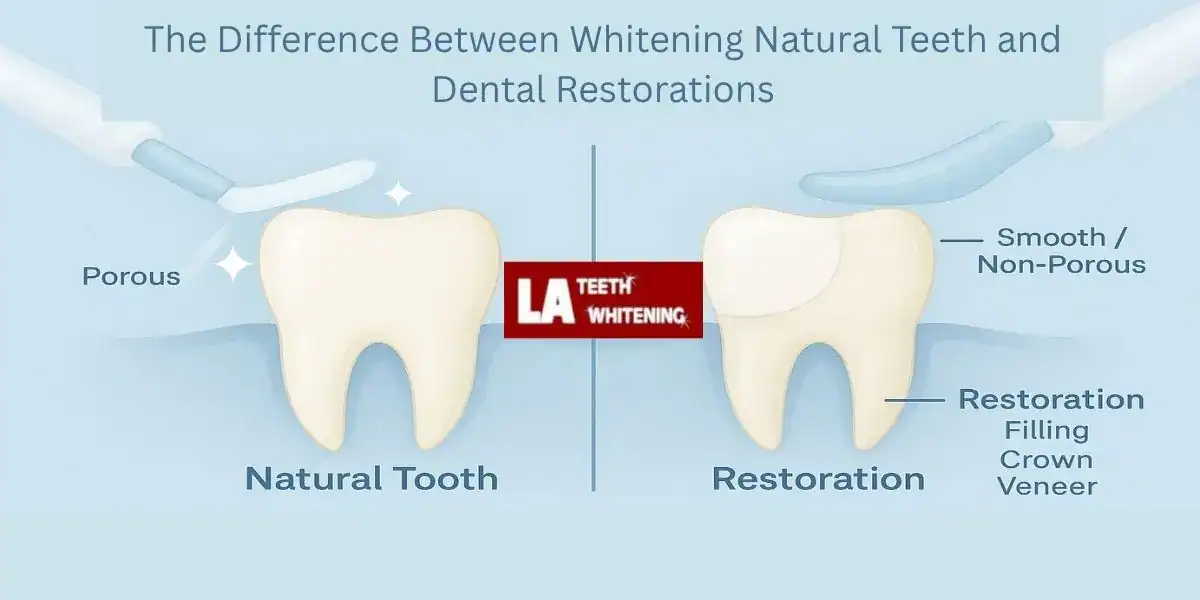
Your natural enamel has microscopic pores that allow whitening agents, like hydrogen peroxide or carbamide peroxide, to penetrate and break down stains. In contrast, restorations are non-porous and stain-resistant, meaning the whitening solution can’t absorb into them or change their intrinsic colour.
So, while your natural teeth can lighten significantly, restorations will remain the same shade they were initially made.
Why Don’t Whitening Treatments Work the Same on Restorations Harlow?
Simply put, restorations are made to resist change.
Porcelain and composite resins are engineered to be durable and maintain their shade for years. During whitening, the laser and whitening gel target pigments trapped in your natural tooth enamel. Since restorations don’t contain these pigments in the same way, the whitening agents have nothing to act on. See Our Before And After Laser Teeth Whitening Results here!
That’s why you might notice a mismatch after whitening — your natural teeth may appear brighter while restorations look slightly darker by comparison.
At LA Teeth Whitening Harlow, our specialists carefully assess your smile before treatment and can advise whether you might need to replace or adjust restorations afterwards to achieve a consistent look.
Why Do Natural Teeth Respond to Laser Whitening While Restorations Don’t?
| Feature | Natural Teeth | Dental Restorations (Crowns, Veneers, Fillings) |
|---|---|---|
| Material Composition | Porous enamel made of hydroxyapatite crystals | Non-porous materials like porcelain or composite resin |
| Reaction to Whitening Gel | Whitening agents penetrate enamel and dissolve stains | Surface is resistant; whitening gel cannot penetrate |
| Response to Laser Activation | Laser light accelerates chemical breakdown of stains | Laser has no bleaching effect on restoration materials |
| Possible Shade Change | Can become several shades lighter | Remains unchanged |
| Post-Whitening Appearance | Brighter, whiter smile | May appear darker if adjacent to whitened teeth |
What Happens When You Whiten Teeth That Have Restorations Harlow?
If you have crowns, veneers, or fillings and undergo professional whitening, only the natural portions of your teeth will lighten. The restorations will remain the same colour, which may result in slight unevenness in shade.
This isn’t harmful, but it can make natural teeth and restorations more noticeable — especially if your restorations were colour-matched to your pre-whitening shade.
At LA Teeth Whitening Harlow, our experts evaluate your smile first. If necessary, we recommend whitening before replacing or fitting restorations so the final result matches your brighter teeth. This ensures your entire smile looks cohesive and naturally radiant.
Should You Whiten Before or After Getting Dental Restorations?
You should whiten before getting restorations.
Here’s why: when a dentist designs a crown or veneer, they match its colour to your existing teeth. If you whiten afterwards, your natural teeth will brighten — but your restorations won’t.
By whitening first, your dental professional can match your restorations to your new, whiter shade, ensuring long-term colour harmony. See Our Amazing Offers On Laser Teeth Whitening Prices
However, suppose you’ve already had restorations placed. In that case, it’s still possible to whiten safely with our at-home laser whitening service — you’ll need to replace the restorations later if colour matching becomes noticeable.
How Can You Keep Both Natural Teeth and Restorations Looking Bright Harlow?
Maintaining a consistent, luminous smile involves both preventative care and professional maintenance.
Here’s how:
- Regular professional whitening sessions with LA Teeth Whitening help maintain brightness safely at home.
- Avoid staining foods and drinks like red wine, coffee, and curry.
- Rinse or brush after meals to prevent new surface stains.
- Schedule periodic touch-ups for restorations every few years, especially if your natural teeth have lightened.
- Use gentle whitening toothpaste to help preserve enamel brightness without scratching restorations.
By combining proper oral hygiene with periodic at-home professional treatments, you can maintain a flawless, balanced smile for years.
When Should You Replace Old Restorations After Whitening?
Restorations naturally age and may become dull or slightly discoloured over time. After professional whitening, these differences can become more visible. Contact Us Today TO Book Your Session Here!
You should consider replacing your restorations if:
- There’s a noticeable colour mismatch after whitening.
- The restoration’s surface has become worn, rough, or stained.
- It’s been several years since they were fitted.
At LA Teeth Whitening Harlow, we work alongside dental professionals to ensure that your whitening results blend seamlessly with any future dental work. This approach ensures that every element of your smile — natural or restored — looks bright, even, and healthy.
FAQs: The Difference Between Whitening Natural Teeth and Dental Restorations
Q: Can professional teeth whitening lighten crowns, veneers, or fillings?
No. Whitening only works on natural enamel. Restorations like crowns, veneers, and fillings are non-porous and won’t change colour. Your natural teeth in Harlow will brighten, but restorations will stay the same shade.
Q: Why don’t dental restorations whiten like natural teeth?
Whitening gel penetrates the tiny pores in enamel to lift stains. Restorations are colour-stable materials, so the gel cannot enter or alter their shade.
Q: Will whitening cause a colour mismatch if I have crowns or veneers?
Possibly. Natural teeth can become brighter while restorations stay the same, creating a slight contrast. Many people in Harlow replace older restorations after whitening to match their new shade.
Q: Should I whiten my teeth before getting new dental restorations?
Yes. Whitening first allows the dentist to match crowns or veneers to your new shade. If you whiten afterwards, restorations may appear darker.
Q: What happens if I whiten at home with existing restorations?
Only natural teeth will lighten. Crowns, veneers, or fillings will not change. You may later choose to replace restorations to match your brighter teeth.
Q: Can laser-assisted whitening damage restorations?
No. Whitening gels and lasers do not harm porcelain, ceramic, or composite materials. They simply don’t react with them.
For More Information, Please Contact Us Today